

21 December 2025
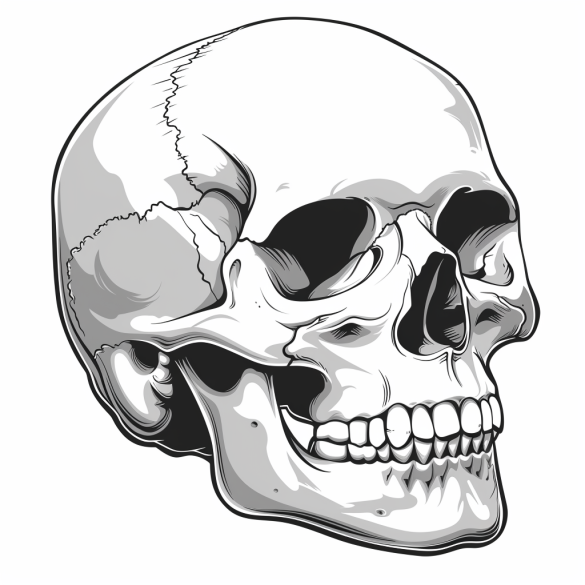
If you’re learning body parts in German - or watching crime shows - today’s word will definitely come up. The German noun Schädel means skull, and while it’s most often used in medical or biological contexts, it also appears in slang, idioms, and expressions of pain. It’s one of the 1000 most frequently used nouns in German, too!
Schädel is a masculine noun, so the correct article is der - der Schädel. Not confident about which article to use? Watch our quick and clear 5-minute gender video to finally understand der, die, and das - without confusion or memorization drills.
While Schädel is the anatomical word for skull, in informal German, it’s also used to describe a bad headache or someone’s head in general - especially in phrases like einen Brummschädel haben (to have a pounding headache, often from a hangover) or mein Schädel brummt (my head is pounding).
- Ich hab so einen Druck im Schädel.- Möchtest du eine Pause machen?(“I’ve got so much pressure in my head.” - “Would you like to take a break?”)
Mira: Hast du dich gestoßen?Jonas: Ja, voll mit dem Schädel gegen die Lampe.Mira: Autsch! Geht’s dir gut?
(Mira: Did you bump yourself?Jonas: Yeah, hit my skull right on the lamp.Mira: Ouch! Are you okay?)
Let’s take a look at Schädel across the four German cases:
Nominative: Der Schädel ist ein Teil des Skeletts.(The skull is a part of the skeleton.)
Accusative: Ich habe den Schädel gesehen.(I saw the skull.)
Dative: Er wurde am Schädel verletzt.(He was injured on the skull.)
Genitive: Die Form des Schädels war auffällig.(The shape of the skull was striking.)
Still confused by German cases? Our fast, friendly grammar course explains the whole system in English with real examples - perfect for learners who want to stop guessing and start getting it right.
The everyday word for head is der Kopf. The usual everyday word for a headache is Kopfschmerzen. Schädel tends to sound more clinical, violent, or humorous depending on the tone. It’s also sometimes used in sarcastic or joking ways, like Boah, mein Schädel brummt! (“Ugh, my skull is buzzing!” - meaning: I’ve got a killer headache.) And a stubborn person is a Dickschädel (literally “thick skull”).
Schädel goes back to Middle High German schedel; its deeper origin is unclear. You’ll see it in compound words like:
Schädelbasis - base of the skull
Schädeldecke - skullcap or cranial dome
Schädelbruch - skull fracture
Schädel-CT - cranial scan (CT scan of the skull)
It also appears in anthropology and archaeology. German museum descriptions often say things like „Schädel eines Neandertalers“ (skull of a Neanderthal), making this word common in science, education, and even horror stories.
Duden entry:https://www.duden.de/rechtschreibung/Schaedel
Ready for more German Words of the Day?Do you know what Schatten means?What about Schatz? One follows you everywhere… the other follows you home.
Free download
Leave your email and I’ll send you a link to the ebook. You’ll also get my occasional German-learning tips. No spam, unsubscribe anytime.


Comments
Loading comments…