

21 December 2025
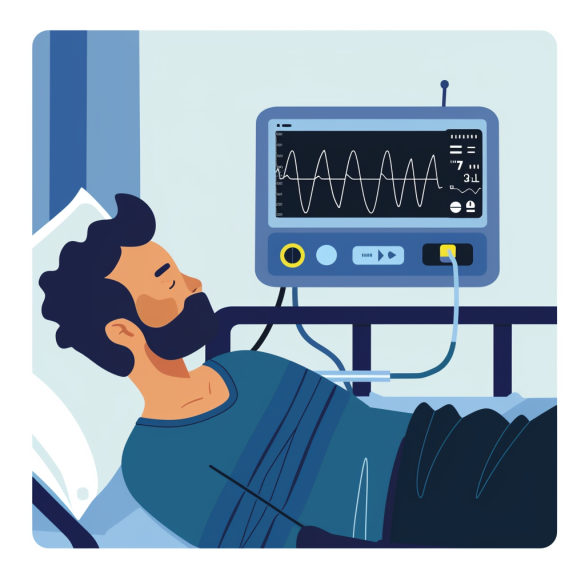
The German word for pulse is der Puls.It’s used the same way as in English - to describe your heartbeat, the rhythm of your body, or even the feel of a situation. You’ll hear it at the doctor’s office, during workouts, and in expressions about stress, love, and excitement.
It’s one of the 1000 most frequently used nouns in German (free illustrated ebook/PDF included!), so it’s worth getting a feel for it - pun intended.
It’s a masculine noun: der Puls.Need a fast way to learn which German nouns are masculine, feminine, or neuter? Our video lesson makes it stick.
Pronunciation: Puls is pronounced [pʊls], with a short
u roughly like the vowel in put. It does not rhyme with tools or use the vowel in English pulse.
Der Puls ist zu hoch.The pulse is too high.
Sie hat einen ruhigen Puls.She has a calm pulse.
Nach dem Joggen habe ich meinen Puls gemessen.After jogging, I measured my pulse.
🫀 Puls is used primarily in physical or medical contexts - but like in English, it can also be metaphorical: den Puls der Zeit fühlen (to feel the pulse of the times).
🏃 You might encounter phrases like hoher Puls (high pulse), niedriger Puls (low pulse), Puls fühlen/messen (to feel/measure the pulse), or Herzfrequenz und Puls (heart rate and pulse) in health apps or doctor visits.
❤️ A rising Puls can appear in poetry or song lyrics. A separate common expression is auf 180 sein (to be furious): Er ist auf 180! (He’s furious!)
“Ich hatte so einen hohen Puls vor dem Vorstellungsgespräch!”I had such a high pulse before the job interview!
“Der Arzt hat meinen Puls kontrolliert.”The doctor checked my pulse.
“Spürst du den Puls?”Can you feel the pulse?
Anna: Bist du okay? Du bist ganz rot im Gesicht.Leo: Ich bin nur schnell die Treppe hochgelaufen.Anna: Dein Puls geht bestimmt durch die Decke!Leo: Fühlt sich auch so an.
Translation:Anna: Are you okay? You’re all red in the face.Leo: I just ran up the stairs.Anna: Your pulse must be through the roof!Leo: It sure feels like it.
Nominative:Der Puls ist kaum spürbar.The pulse is barely noticeable.
Accusative:Der Arzt misst den Puls.The doctor measures the pulse.
Dative:Mit dem Puls stimmt etwas nicht.Something’s wrong with the pulse.
Genitive:Die Stärke des Pulses ist entscheidend.The strength of the pulse is crucial.
Puls means pulse; Herzschlag means heartbeat and is also an ordinary medical and everyday word. The two are related but are not identical to circulation. In music or rhythm, Takt (beat) can carry a similar meaning. And Rhythmus sometimes fills in for general rhythm or pulse in non-medical contexts.
In a figurative sense, people also use den Puls der Zeit fühlen (“to feel the pulse of the times”) to describe cultural awareness or trendiness.
Related terms include Blutdruck und Puls (blood pressure and pulse), Pulsfrequenz (pulse rate), and Pulsmessgerät (pulse monitor). In fitness, Pulszonen (pulse zones) define training intensity.
🧠 Fun fact: The Latin word pulsus (a beating, striking) gave rise to English pulse and German Puls - one of the many shared heartbeats in our vocabularies.
📘 Duden entry for Puls🎥 Want to keep your finger on the pulse of German learning? Our video course teaches this word and 999 others - visually, clearly, and with tons of real-life examples.
Ready for more German Words of the Day?Do you know what Realität means? It’s where feelings and facts collide.And what about Opfer? It’s a word that carries weight - sometimes more than one heart can handle.
Free download
Leave your email and I’ll send you a link to the ebook. You’ll also get my occasional German-learning tips. No spam, unsubscribe anytime.


Comments
Loading comments…