

21 December 2025
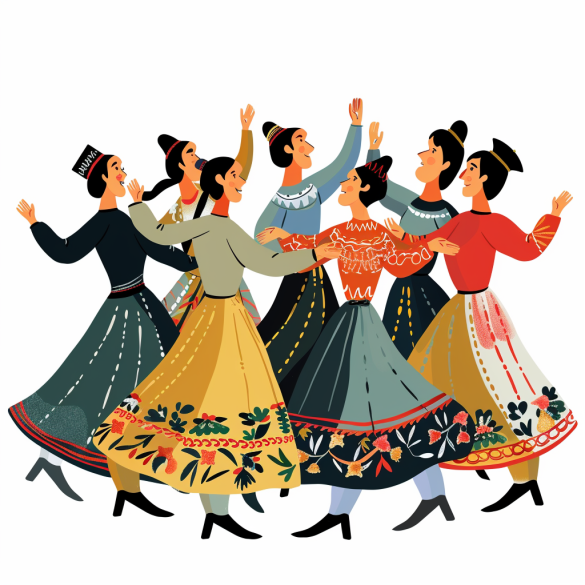
It’s the crowd at a festival, the voting public, the subject of speeches - and sometimes, a heavy word from history. In German, it’s das Volk. This is your German word of the day, and it carries a lot more weight than just “people.”
The noun Volk means people, nation, or the public, and it’s one of the 1000 most frequently used nouns in German. You’ll encounter it in political language, historical documents, fairy tales, and modern slogans.
It’s a neuter noun, so we say das Volk (still unclear on gender? Our quick, no-nonsense video guide will make it all click: Watch the 5-minute video lesson on German noun genders).
Volk is pronounced [fɔlk], with a short open o and a pronounced l.
It’s simple to pronounce, but conceptually complex.
Das Volk hat entschieden.The people have decided.
Ein Märchen aus dem Volk.A folk tale from the people.
Volk refers to:
⚠️ Important note: Because of its use in Nazi propaganda (“Ein Volk, ein Reich, ein Führer”), the word Volk can carry political or emotional weight, especially when used in certain nationalistic contexts. In everyday speech, however, it’s still used in many neutral, cultural, or bureaucratic expressions. And in 1989, East Germans reclaimed it with the peaceful protest chant “Wir sind das Volk!” (We are the people!).
Beginners will see Volk most often in compound words like:
You’ll also hear it in phrases like:
“Das Volk will Veränderung.” - The people want change.“Er ist ein Mann aus dem Volk.” - He’s a man of the people.
It’s more formal than “Leute” (folks, people) and leans toward public or collective meanings.
Ben: Warum heißt es Volkswagen?Mila: Der Name bedeutet „Wagen für das Volk“.Ben: Also für alle Leute?Mila: Genau - daher kommt der Name.
Ben: Why is it called Volkswagen?Mila: The name means “car for the people.”Ben: So for everyone?Mila: Exactly-that’s where the name comes from.
Nominative:Das Volk war unzufrieden.The people were dissatisfied.
Accusative:Er führte das Volk in die Stadt.He led the people into the city.
Dative:Mit dem Volk sprach niemand offen.No one spoke openly with the people.
Genitive:Die Stimme des Volkes wurde laut.The voice of the people grew louder.
Neuter case pattern: das, das, dem, des
Some common and useful compounds:
Softer synonyms:
📘 Duden entry: https://www.duden.de/rechtschreibung/Volk🎥 Learn Volk and the rest of the top 1000 German nouns in our free online video course: Watch the 1000 German Nouns video course
Ready for more German words of the day? Do you know what Vogel means? How about Vorfall? Find out!
Free download
Leave your email and I’ll send you a link to the ebook. You’ll also get my occasional German-learning tips. No spam, unsubscribe anytime.


Comments
Loading comments…