

21 December 2025
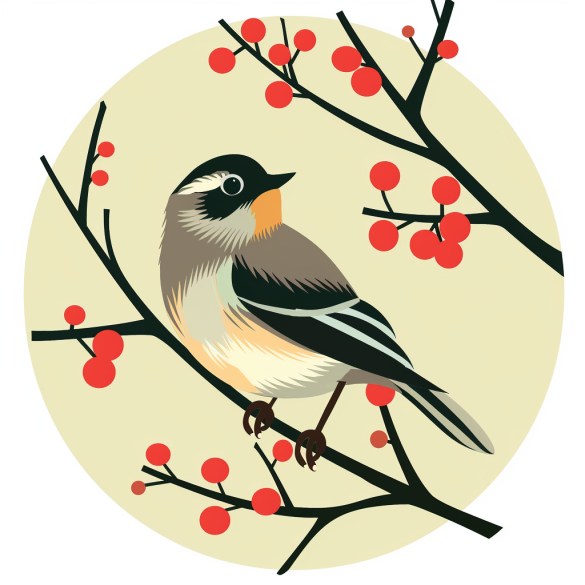
It’s what flies above us, chirps in the trees, and pops up in fairy tales and everyday speech. In German, that’s der Vogel. This is your German word of the day, and it’s not just a noun - it’s part of some of the most colorful expressions in the language. Let’s find out how to say bird in German!
The noun Vogel means bird, and it’s one of the 1000 most frequently used nouns in German. Whether you’re watching birds in the park or joking with friends, you’ll hear and use it often.
It’s a masculine noun, so we say der Vogel (struggling with gender? Our quick and clear video guide will finally make sense of it: Watch the 5-minute video lesson on German noun genders).
Vogel is pronounced [FOH-gel].
The V sounds like F,
The o is long and steady, without the glide in American “go,”
The g is a hard g, as in “go,” and
The el is gently pronounced like uhl
Stress is on the first syllable: VO-gel - easy to say, and hard to forget.
Ich habe einen bunten Vogel im Garten gesehen.I saw a colorful bird in the garden.
Der Vogel fliegt sehr hoch.The bird is flying very high.
Vogel is both literal (a bird, including flightless birds) and metaphorical (a quirky person, an insult, or even a compliment depending on tone).
Some common compound words:
Singvogel - songbird
Raubvogel - bird of prey
Vogelhaus - birdhouse
Vogelfutter - bird feed
Vogelkunde - ornithology
German uses Vogel in lots of vivid expressions. Some of the most popular:
einen Vogel haben - to be a little crazy / nuts
Du hast doch einen Vogel! - You must be nuts!(This is common and can sound humorous or insulting, depending on tone.) Jemandem einen Vogel zeigen means tapping your forehead to suggest someone is crazy; it is a rude gesture.
Der frühe Vogel fängt den Wurm. - The early bird catches the worm.
Used just like in English, encouraging people to get up early or act fast.
ein komischer Vogel - a strange (quirky) person
Er ist ein netter, aber komischer Vogel. - He’s nice, but a weird guy.
freie Vögel - free spirits (a figurative image)
frei wie ein Vogel - free as a bird
vogelfrei - outlawed, historically outside legal protection
Wir sind doch freie Vögel! - We’re free spirits, aren’t we?
den Vogel abschießen - to take the cake, outdo everyone (sometimes ironically)
These idioms are perfect for sounding natural - and a bit cheeky - in everyday German.
Even beginners will hear or use Vogel in basic outdoor descriptions, nature topics, or small talk.
“Was für ein Vogel ist das?” - What kind of bird is that?“Ich habe einen toten Vogel auf dem Balkon gefunden.” - I found a dead bird on the balcony.(Yes, it happens in real life.)
You’ll also hear the idiom “einen Vogel haben” in conversations when someone does something silly, bold, or out of the ordinary.
Nico: Guck mal! Was für ein Vogel ist das?Mila: Ich glaube, ein Specht.Nico: Der macht ganz schön Lärm.Mila: Ja, aber ich finde ihn süß!
Nico: Look! What kind of bird is that?Mila: I think it’s a woodpecker.Nico: It’s making a lot of noise.Mila: Yeah, but I think it’s cute!
Nominative:Der Vogel singt jeden Morgen.The bird sings every morning.
Accusative:Ich habe den Vogel gesehen.I saw the bird.
Dative:Mit dem Vogel stimmt etwas nicht.Something’s wrong with the bird.
Genitive:Die Federn des Vogels sind blau.The bird’s feathers are blue.
Masculine case pattern: der, den, dem, des
Other useful forms:
Vögel - birds (plural)
Vogelarten - bird species
Vogelschutzgebiet - bird sanctuary
Vogelperspektive - bird’s-eye view
Vogelnest - bird’s nest
Fun fact: In German, you might be called a komischer Vogel and still be liked. It’s not necessarily offensive - just colorful.
📘 Duden entry: https://www.duden.de/rechtschreibung/Vogel🎥 Learn Vogel and the rest of the top 1000 German nouns in our free online video course: Watch the 1000 German Nouns video course
Want another word of the day? Do you know Vorfall? Or Vorschlag? Check them out!
Free download
Leave your email and I’ll send you a link to the ebook. You’ll also get my occasional German-learning tips. No spam, unsubscribe anytime.


Comments
Loading comments…