

21 December 2025
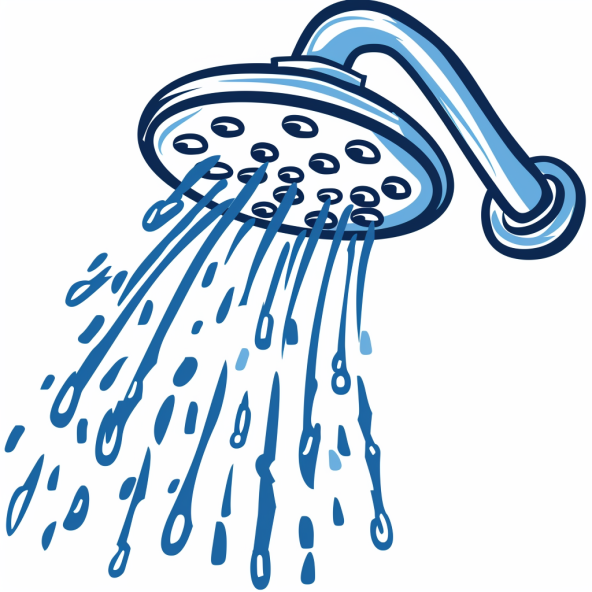
Whether you’re waking up in the morning, rinsing off after the gym, or just avoiding the bathtub - Germans call it a Dusche. It’s a daily ritual, a bathroom essential, and sometimes even a lifesaver in a heatwave.
The noun Dusche means shower, and it’s one of the 1000 most frequently used nouns in German. It refers to both the physical appliance and the act of showering.
It’s a feminine noun, so we say die Dusche.
Dusche is pronounced [DOO-shuh].
It’s short, splashy, and easy to remember - just like a quick rinse.
Example sentences:
Dusche is used for:
A useful contrast is das Bad (a bath) or die Badewanne (a bathtub); these are alternatives, not antonyms of Dusche.
Feminine case pattern: die, die, der, der
Variation Station:
Fun usage note:In idiomatic speech, eine kalte Dusche can mean more than just icy water:
Die Kritik war wie eine kalte Dusche.“The criticism was a cold shower” (i.e., harsh or sobering).
📘 Duden entry: https://www.duden.de/rechtschreibung/Dusche
🎥 Learn Dusche and the rest of the top 1000 German nouns in our free online video course:Watch the 1000 German Nouns video course
Ready for more German words of the day? Do you know what Drehbuch means? How about Botschafter? Find out!
Alternate translations note:If you’re referring to showering in a general sense, duschen (verb) is more common:
Ich habe geduscht. - “I showered.”But when referring to the object or space itself, or the act as a noun, Dusche is the word you need. Careful: a rain shower is ein Schauer (Regenschauer), and a baby shower is a Babyparty.
Free download
Leave your email and I’ll send you a link to the ebook. You’ll also get my occasional German-learning tips. No spam, unsubscribe anytime.


Comments
Loading comments…