

21 December 2025
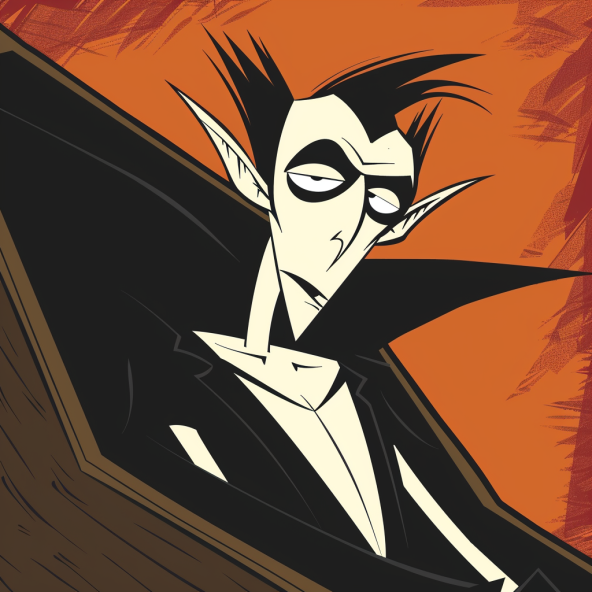
It’s the creature of the night, a Halloween favorite, and the reason garlic has a reputation. In German, it’s der Vampir. This is your German word of the day, and while it may not be essential for paperwork, it is essential for folklore, fiction, and fun conversations.
The noun Vampir means vampire, and it’s one of the 1000 most frequently used nouns in German. Whether you’re watching a scary movie, reading a novel, or shopping for Halloween costumes, this word sinks its teeth into German culture too.
It’s a masculine noun, so we say der Vampir (want to finally make gender feel logical? Our video lesson explains it all simply and clearly).
Vampir is pronounced [vahm-PEER].
Vam starts with v as in “voice,” followed by a short a; the American vowel in “mom” is only an approximation,
pir rhymes with “beer,”
Stress is on the second syllable: vam-PEER
It’s nearly identical to English, with just a little more drama in the final syllable.
Hast du den Film mit dem Vampir gesehen?Did you see the movie with the vampire?
Der Vampir trug einen schwarzen Umhang.The vampire wore a black cloak.
In German, Vampir almost always refers to the mythological creature - a bloodsucking undead being popular in both classic and modern horror:
Vampirgeschichte - vampire story
Vampirfilm - vampire movie
Vampirzähne - vampire teeth
Feminine form: die VampirinPlural: die Vampire
German pop culture has its own share of vampire novels, games, and Halloween costumes, and the term Vampir fits perfectly into that spooky context.
You’ll hear Vampir in:
Conversations around Halloween or costumes
Movie reviews
Fantasy and horror literature
Jokes about people who hate sunlight or love sleeping
“Er sieht aus wie ein Vampir - immer so blass!” - He looks like a vampire - always so pale!
Nico: Was willst du an Halloween sein?Tina: Ein Vampir, natürlich!Nico: Mit Umhang und falschen Zähnen?Tina: Klar. Und ich übe schon meinen Gruselblick.
Nico: What do you want to be for Halloween?Tina: A vampire, of course!Nico: With a cloak and fake teeth?Tina: Of course. I’m already practicing my scary stare.
Nominative:Der Vampir kam aus dem Schatten.The vampire came out of the shadows.
Accusative:Ich habe den Vampir nicht gesehen.I didn’t see the vampire.
Dative:Mit dem Vampir wollte niemand reden.No one wanted to talk to the vampire.
Genitive:Die Augen des Vampirs leuchteten rot.The vampire’s eyes glowed red.
Masculine case pattern: der, den, dem, des
Related words and phrases:
Vampirin - female vampire
Vampirzähne - vampire fangs
Vampirjäger - vampire hunter
Vampirroman - vampire novel
vampirartig - vampire-like
Fun cultural note: German folklore doesn’t have as strong a native vampire tradition as Slavic countries, but films, books and Halloween have helped keep Vampir in modern vocabulary. A German vampire-film classic is Nosferatu (1922).
📘 Duden entry🎥 Want to master German nouns the fun and effective way? Our free video course walks you through the top 1000 words with real-life examples, visuals, and grammar hacks that make learning stick.
Ready for more German Words of the Day?Do you know what Verabredung means? It might just involve dinner, candles, or a polite cancellation.What about Verbrechen? That one gets a little darker - and not just around midnight.
Free download
Leave your email and I’ll send you a link to the ebook. You’ll also get my occasional German-learning tips. No spam, unsubscribe anytime.


Comments
Loading comments…