

21 December 2025
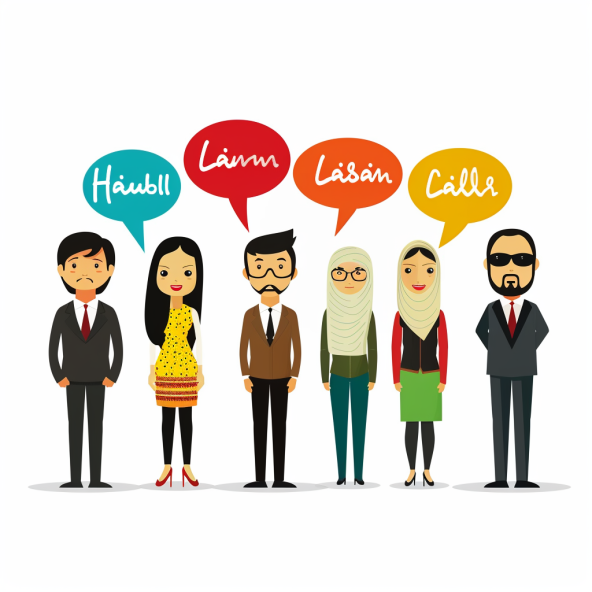
The German word for language is die Sprache.
It refers to spoken and written systems of communication, from German and English to emoji and dialects. But Sprache in German is also used in phrases about tone, expression, and style - not just national languages.
It’s one of the 1000 most frequently used nouns in German (you can download a free illustrated PDF to study them all!), and a foundation for talking about identity, communication, and learning.
It’s a feminine noun: die Sprache.
Want to master gender without guessing? Our video lesson gives you patterns and hacks that make it easier.
Pronunciation:
Sprache is pronounced [SHPRAH-khuh]
“SHPR” like “spray” with a soft “sh”
“AH” like “father”
“khuh” with the German “ch” as in “Bach”
Two syllables: SHPRAH-khuh
Ich lerne gerade eine neue Sprache.
I’m currently learning a new language.
Welche Sprache spricht man in der Schweiz?
What language is spoken in Switzerland?
Sprache ist der Schlüssel zur Kultur.
Language is the key to culture.
🗣️ Sprache can refer to specific languages (e.g. die deutsche Sprache), but also style, tone, or expression. You might hear beleidigende Sprache (offensive language), Fachsprache (technical jargon), or kindgerechte Sprache (child-friendly language).
🌍 You’ll hear it in phrases like Fremdsprache (foreign language), Muttersprache (mother tongue), and Zweitsprache (second language).
🎭 It also extends to types of expression - Körpersprache (body language), Gebärdensprache (sign language), or Programmiersprache (programming language). Sign languages are full languages, not simply gestures or body language.
Do you like the game “memory”? Well, what if it was all useful German vocabulary flashcards? Play our free game - no ads, no signup.
“Wie viele Sprachen sprichst du?”
How many languages do you speak?
“Die Sprache im Vertrag ist sehr kompliziert.”
The language in the contract is very complicated.
“Ich liebe diese Sprache - sie klingt so schön.”
I love this language - it sounds so beautiful.
Lea: Welche Sprache lernst du gerade?
Noah: Spanisch! Und du?
Lea: Ich versuche es mit Deutsch.
Noah: Tolle Sprache - aber gar nicht so leicht!
Translation:
Lea: Which language are you learning right now?
Noah: Spanish! And you?
Lea: I’m trying German.
Noah: Great language - but not so easy!
Nominative:
Die Sprache ist schwer zu lernen.
The language is hard to learn.
Accusative:
Ich studiere die Sprache an der Uni.
I study the language at university.
Dative:
Mit der Sprache kommt man schnell weiter.
With the language, you progress quickly.
Genitive:
Die Struktur der Sprache ist faszinierend.
The structure of the language is fascinating.
While Sprache is the standard word for language in German, other expressions offer nuance. Rede means a formal speech, while Sprache covers the broader system of communication. Dialekt refers to a regional dialect, and Mundart is another (slightly old-fashioned) term for dialect. When talking about computer languages, Sprache still applies (Programmiersprache), while Code is used informally. You may also see Sprachsystem or Sprachgebrauch in academic settings to talk about how language works or is used.
You’ll find Sprache in compounds like Fremdsprache (foreign language), Muttersprache (native tongue), Amtssprache (official language), and Sprachkurs (language course). It also appears in cultural and scientific contexts: Sprachwissenschaft (linguistics), Sprachbarriere (language barrier), and Sprachförderung (language support). Expressions include eine klare Sprache sprechen (to speak plainly), es verschlägt einem die Sprache (to leave someone speechless), etwas zur Sprache bringen (to bring something up), and Heraus mit der Sprache! (Out with it!).
🧠 Fun fact: The word Sprache comes from the verb sprechen (to speak), and its root can be traced back to the Proto-Germanic sprekanan. It’s one of the first words German learners learn - and one of the last they stop using.
Die Sprache is feminine, like most -e endings. If gender is still where you stall mid-sentence, the cure isn’t more theory - it’s reps. der die das practice is built specifically for that.
🎥 Want to speak the language of learning? Our free video course teaches the top 1000 German nouns - with usage, examples, and a printable illustrated PDF to go with it.
Ready for more German Words of the Day?
Do you know what Schutz means? It helps your Sprache stay safe.
And what about Spinner? Let’s just say, they sometimes invent their own.
Free download
Leave your email and I’ll send you a link to the ebook. You’ll also get my occasional German-learning tips. No spam, unsubscribe anytime.


Comments
Loading comments…