

21 December 2025
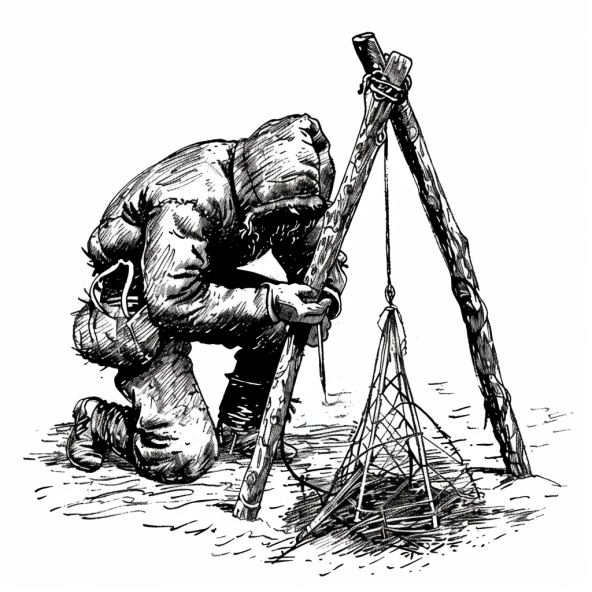
Whether it’s set for a mouse, a villain, or an unsuspecting tourist, Germans call it a Falle. But the word doesn’t just spring shut in cartoons - it’s also used for tricky situations, bad decisions, and emotional manipulation.
The noun Falle means trap, and it’s one of the 1000 most frequently used nouns in German. You’ll hear it in crime stories, warnings, idioms, and life advice.
It’s a feminine noun, so we say die Falle.
Falle is pronounced [FAH-luh], with:
It’s snappy but soft - just like some real traps.
Example sentences:
Falle can be:
A related contrast is der Ausweg (a way out or escape route), rather than a strict antonym of Falle.
Feminine case pattern: die, die, der, der
Variation Station:
Fun usage note:The idiom in die Falle tappen is used very often in German to mean “to be tricked,” “to fall for something,” or “to make a predictable mistake.” It’s useful both in casual speech and formal writing. And colloquially, Falle can even mean bed: Ab in die Falle! - Off to bed!
📘 Duden entry: https://www.duden.de/rechtschreibung/Falle
🎥 Learn Falle and the rest of the top 1000 German nouns in our free online video course:Watch the 1000 German Nouns video course
Alternate translations note:For a literal snare, Schlinge can be more specific. Tücke means malice or a hidden difficulty; neither word is simply a rare synonym of Falle. In nearly all everyday uses, from mousetraps to life traps, Falle is your word.
Ready for more German words of the day? Do you know what Firma means? How about Fluch? Find out!
Free download
Leave your email and I’ll send you a link to the ebook. You’ll also get my occasional German-learning tips. No spam, unsubscribe anytime.


Comments
Loading comments…