

21 December 2025
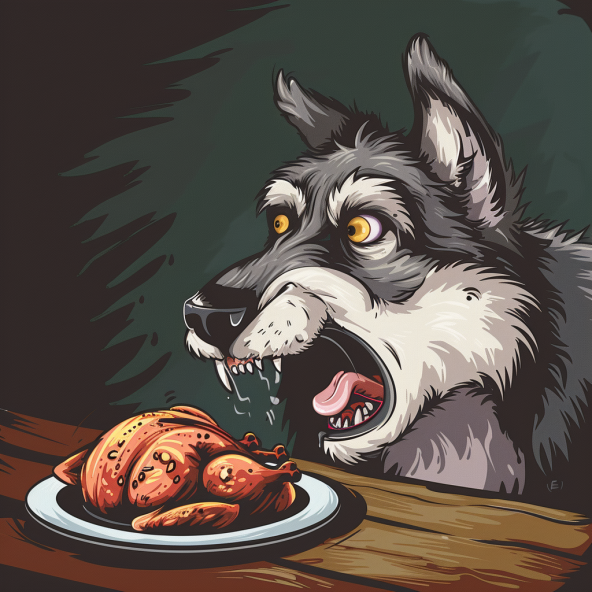
Whether it’s a growling stomach, a craving for pizza, or a crisis in a developing country - Germans use the same word: Hunger. It’s primal, physical, and deeply human. And yes, it’s the same word in English - just with a sharper German bite.
The noun Hunger means hunger or extreme appetite - ranging from a casual “I’m hungry” to the global tragedy of famine. It’s a core human experience and one of the 1000 most frequently used nouns in German, so you’ll encounter it early and often.
It’s a masculine noun, so we say der Hunger.
Hunger is pronounced [ˈhʊŋɐ], with a short u as in "put." The ng is one sound, as in "singer," with no separate g; the final -er is commonly a reduced vowel. It sounds slightly more urgent and growly than the English equivalent. Appropriate.
Example sentences:
You’ll most often see Hunger paired with haben (to have):
Ich habe Hunger and Ich bin hungrig both mean "I'm hungry" and are natural in everyday German. Hunger haben is a useful common phrase, not a rule against hungrig.
And Hunger can also be metaphorical, expressing deep desire:
An opposite? Of course: Sättigung (feminine, die Sättigung), meaning satiation or fullness - though that’s more scientific or nutritional. In speech, Germans are more likely to say Ich bin satt (“I’m full”).
Masculine pattern: der, den, dem, des
Variation Station:
And: Hunger Games is translated as Die Tribute von Panem in German, not Hungerspiele.
🎥 Learn Hunger and the rest of the top 1000 German nouns in our free online video course:Watch the 1000 German Nouns video course
Up for another German word of the day? How about Unrecht? Or do you know how to say hint in German?
Free download
Leave your email and I’ll send you a link to the ebook. You’ll also get my occasional German-learning tips. No spam, unsubscribe anytime.


Comments
Loading comments…