

21 December 2025
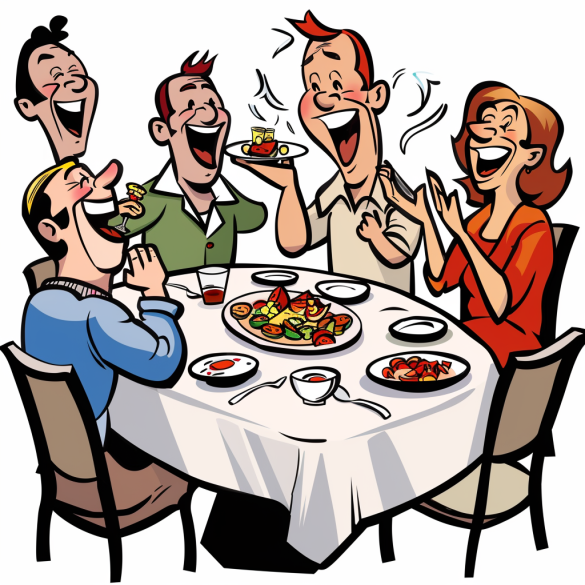
Today’s word walks the line between funny and cheeky. The German noun Scherz means joke, prank, or jest, and it pops up in both lighthearted conversation and formal writing - sometimes playful, sometimes ironic. It’s one of the 1000 most frequently used nouns in German, too!
Scherz is a masculine noun, so the correct article is der - der Scherz. Not sure how to handle German noun genders confidently? Check out our quick and incredibly helpful 5-minute video lesson that gives you everything you need to know - no memorization, no nonsense.
You’ll hear Scherz when someone’s trying to be funny - or pretending to be. It’s a slightly more formal or dramatic way to say Witz (joke), often used when clarifying that something wasn’t serious or when calling out someone else’s joke.
- Ich heirate morgen.- Was?! Ernsthaft?!- Nein, war nur ein Scherz.(“I’m getting married tomorrow.” - “What?! Seriously?!” - “No, just a joke.”)
Lina: Dein Pulli ist… äh… grün wie ein Frosch!Mika: Sehr witzig. War das ein Scherz?Lina: Natürlich! Ich mag deinen Pulli wirklich.
(Lina: Your sweater is… um… green like a frog!Mika: Very funny. Was that a joke?Lina: Of course! I really do like your sweater.)
Let’s go through Scherz in all four German cases:
Nominative: Der Scherz war unpassend.(The joke was inappropriate.)
Accusative: Ich habe den Scherz nicht verstanden.(I didn’t understand the joke.)
Dative: Mit einem Scherz lockerte sie die Stimmung.(She lightened the mood with a joke.)
Genitive: Die Pointe des Scherzes war ziemlich gemein.(The punchline of the joke was rather mean.)
Want to finally understand what nominative and dative really mean - and how to get them right without overthinking? Try our super-practical German grammar course - all in English, built for learners who just want to speak and understand.
The everyday word for joke is der Witz, which you’ll hear much more often in casual speech. Scherz tends to feel slightly more formal or literary, though it’s still common in speech - especially in phrases like War nur ein Scherz (“Just kidding”) or Zum Scherz (“as a joke”). For pranks or mischief, Streich or Spaß can also work, depending on tone.
Scherz goes back to Middle High German scherz (fun, play). Italian scherzare also has a Germanic origin, and the musical term scherzo comes from Italian. It shows up in:
Scherzbold - a jokester or prankster
Scherzfrage - a trick question
Spaß beiseite - all joking aside
scherzen - to joke
You might also see Scherzartikel in stores - novelty prank items, like fake spiders or whoopee cushions. And in writing, especially in emails or texts, someone might soften a bold comment with 😉 war nur ein Scherz.
Duden entry:https://www.duden.de/rechtschreibung/Scherz
Ready for more German Words of the Day?Do you know what Schiff means?What about Schicksal? One takes you places… the other decides where you’re going.
Free download
Leave your email and I’ll send you a link to the ebook. You’ll also get my occasional German-learning tips. No spam, unsubscribe anytime.


Comments
Loading comments…