

21 December 2025
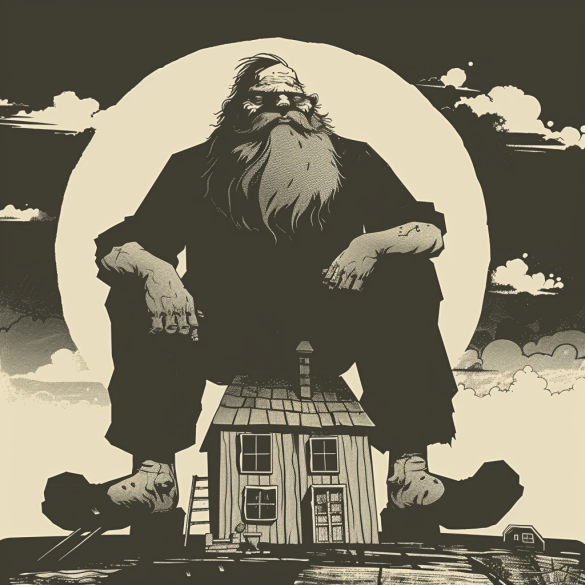
The German word for giant is der Riese.It can refer to an actual giant from folklore or mythology - or to anyone or anything very large, powerful, or impressive.
It’s one of the 1000 most frequently used nouns in German and shows up in books, conversations, and headlines alike.
It’s a masculine noun: der Riese. Note that it’s an n-noun: den, dem and des Riesen. The plural is die Riesen; the feminine form is die Riesin (plural: Riesinnen).Want to get better at recognizing gender? Our video lesson helps you learn fast and stick with it.
Pronunciation:Riese is pronounced [REE-zuh]
“REE” like reel
“zuh” like sofaTwo syllables: REE-zuh
Der Riese wohnt in den Bergen.The giant lives in the mountains.
Er ist ein Riese im internationalen Handel.He’s a giant in international trade.
Mit zwei Metern ist sie ein echter Riese im Team.At two meters tall, she’s a real giant on the team.
📖 In stories and legends, Riese means an enormous human-like creature - think Jack and the Beanstalk.
🌍 In modern usage, Riese can also mean someone or something dominant or impressive: ein Wirtschaftsriese (economic giant), Technologieriese (tech giant).
⚠️ For very tall people, the word can be playful or admiring - but it can also sound odd if used literally in conversation. Context matters.
“Google ist ein echter Riese im Internet.”Google is a true giant on the internet.
“Der Typ war ein Riese - fast zwei Meter!”The guy was a giant - almost two meters tall!
“In der Sage kämpfte ein Riese gegen einen Zwerg.”In the legend, a giant fought a dwarf.
Leo: Hast du das neue Fantasybuch gelesen?Tina: Ja - mit dem Riesen, der das Dorf angreift?Leo: Genau! Der war echt gruselig.Tina: Aber am Ende war er gar nicht böse.
Translation:Leo: Did you read the new fantasy book?Tina: Yeah - the one with the giant attacking the village?Leo: Exactly! He was really scary.Tina: But in the end, he wasn’t even evil.
Nominative:Der Riese ist riesengroß.The giant is gigantic.
Accusative:Ich habe den Riesen besiegt!I defeated the giant!
Dative:Mit dem Riesen konnte niemand mithalten.No one could keep up with the giant.
Genitive:Die Schritte des Riesen waren wie Donnerschläge.The giant’s steps were like thunderclaps.
Gigant can also mean giant and often sounds more dramatic, especially in metaphors (ein Gigant der Musik = a giant of music). The adjective riesig means huge and can describe people as well as things.
You’ll see Riese in:
Riesenschritt (giant step)
Riesenfreude (huge joy)
Riesenerfolg (giant success)
Riesenkonzern (corporate giant)
Riesending (huge thing)
🧠 Fun fact: The adjective riesig comes directly from Riese. It’s one of the most common ways to say “huge” in German.
📘 Duden entry for Riese:https://www.duden.de/rechtschreibung/Riese🎥 Want to conquer German like a Riese? Our video course teaches the top 1000 nouns with big-picture clarity and small-step mastery.
Ready for more German Words of the Day?Do you know what Roman means? Every good story needs at least one Riese.And what about Rückkehr? Even giants eventually come home.
Free download
Leave your email and I’ll send you a link to the ebook. You’ll also get my occasional German-learning tips. No spam, unsubscribe anytime.


Comments
Loading comments…