

21 December 2025
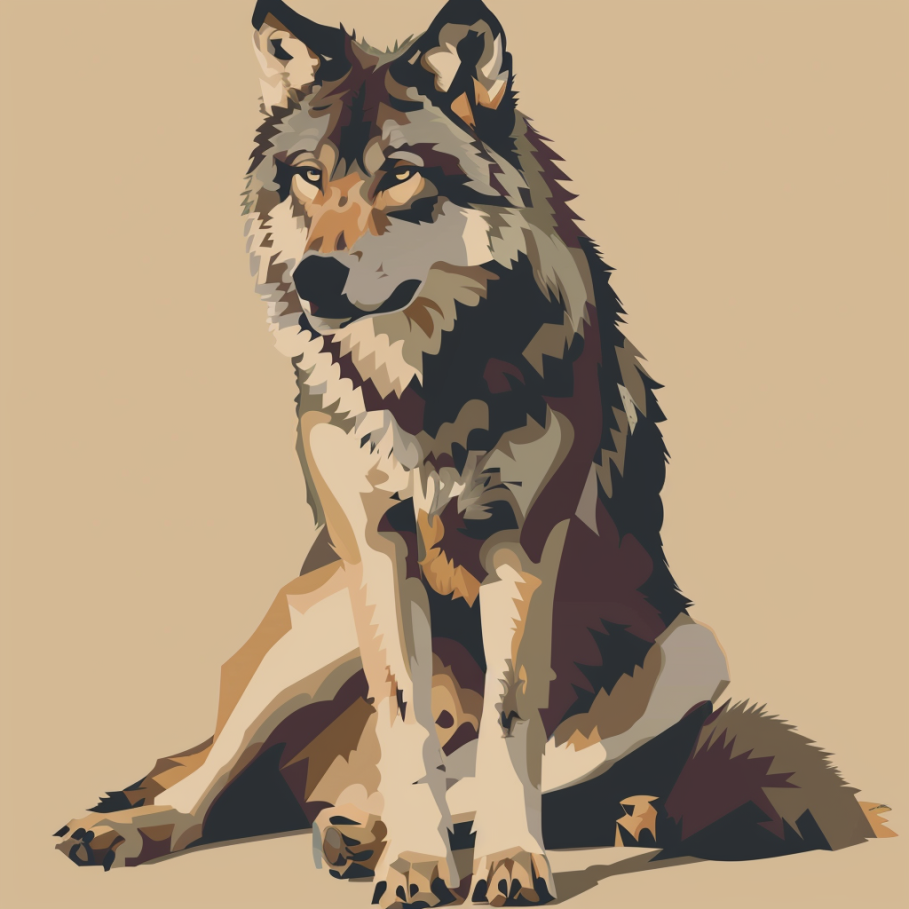
Whether it’s stalking through a fairy tale, roaming the forests, or starring in conservation debates - Germans call it a Wolf. It’s a word that carries both fear and fascination, from children’s stories to real-life nature sightings.
The noun Wolf means wolf, and it’s one of the 1000 most frequently used nouns in German. You’ll hear it in environmental conversations, idioms, fables, and names.
It’s a masculine noun, so we say der Wolf.
Wolf is pronounced [volf] - with a short open o and all consonants pronounced; English “golf” is only an accent-dependent approximation.
It’s solid, primal, and unmistakably wild.
Example sentences:
Wolf is both literal and symbolic in German. It refers to the real animal Canis lupus, but it also carries centuries of cultural baggage:
Related animal word: das Schaf means sheep. A sheep is not a lexical antonym of a wolf.
Dingsies are cute but very dumb. Guide them through the correct German words towards safety! The more you play, the better your German gets!
Masculine case pattern: der, den, dem, des
Variation Station:
Fun idiomatic note:
The phrase ein Wolf im Schafspelz is used exactly like in English:
„Er gibt sich freundlich, aber er ist ein Wolf im Schafspelz.“
“He acts friendly, but he’s a wolf in sheep’s clothing.”
📘 Duden entry: https://www.duden.de/rechtschreibung/Wolf
Der Wolf, die Wölfe - masculine with an umlauted -e plural, one of the trickier patterns to predict. Plurals don’t really follow a single rule; the cure is volume, which is what German plurals practice gives you in short daily rounds.
🎥 Learn Wolf and the rest of the top 1000 German nouns in our free online video course:
Watch the 1000 German Nouns video course
Alternate translations note:
For dog, use Hund. For a mythical or metaphorical wolf, you may encounter Werwolf or just metaphorical uses of Wolf. But whether you’re out in the woods or deep in a story - Wolf is the word to watch.
Ready for more German words of the day? Do you know what Technik means? How about Teufel? Find out!
Free download
Leave your email and I’ll send you a link to the ebook. You’ll also get my occasional German-learning tips. No spam, unsubscribe anytime.


Comments
Loading comments…