

21 December 2025
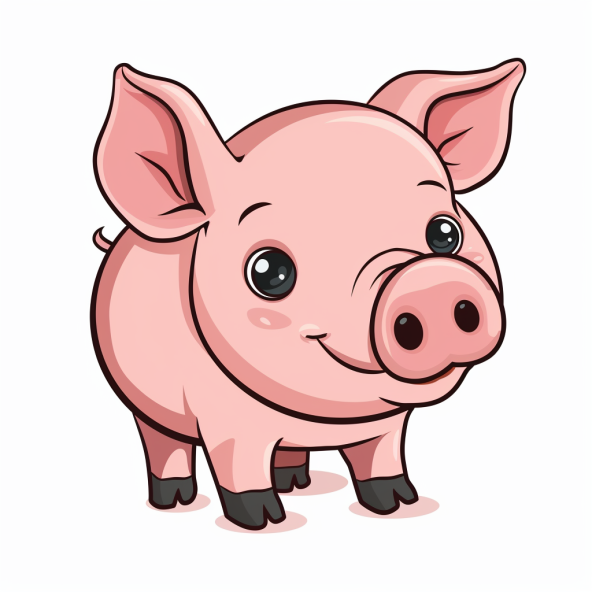
The German word for pig is das Schwein.
Schwein in German appears in farm talk, food, fairy tales - and also in dozens of idiomatic expressions. It can refer to the animal itself, but also to luck or insults, depending on context.
It’s one of the 1000 most frequently used nouns in German (and available in a free illustrated PDF you can download).
It’s a neuter noun: das Schwein.
Need help nailing down genders? This video lesson gives you practical patterns to follow.
Pronunciation:
Schwein is pronounced [shvine]
Rhymes with “wine”
One syllable: SHVINE
Das Schwein wälzt sich im Schlamm.
The pig is rolling in the mud.
Zum Frühstück gab es Schweinefleisch.
There was pork for breakfast.
Was für ein Schwein!
What a pig! (can be an insult or a joke)
“Ich habe heute richtig Schwein gehabt!”
I was really lucky today!
“Das ist ein Schweinestall, kein Kinderzimmer.”
This is a pigsty, not a kid’s room.
“Das arme Schwein hatte keine Chance.”
That poor guy had no chance.
Nina: Hast du das Schwein gesehen?
Tobi: Ja - es ist total süß!
Nina: Ich hätte nie gedacht, dass Schweine so klug sind.
Tobi: Sie sind echt intelligent!
Translation:
Nina: Did you see the pig?
Tobi: Yeah - it’s super cute!
Nina: I never thought pigs were so smart.
Tobi: They really are!
Do you like the game “memory”? Well, what if it was all useful German vocabulary flashcards? Play our free game - no ads, no signup.
Nominative:
Das Schwein ist rosa.
The pig is pink.
Accusative:
Ich füttere das Schwein.
I’m feeding the pig.
Dative:
Mit dem Schwein gehe ich spazieren.
I take the pig for a walk.
Genitive:
Die Ohren des Schweins sind klein.
The pig’s ears are small.
While Schwein is the standard word for pig in German, there are related terms: Ferkel means piglet, and Eber (boar) and Sau (sow) refer to male and female pigs. Wildschwein refers to wild boars. In slang, Schwein can be an insult, while Glücksschwein refers to a symbol of good luck.
Schwein shows up in phrases like innerer Schweinehund (the inner resistance that makes it hard to get things done), Schwein haben (to be lucky), and armes Schwein (poor guy). It also appears in Schweinefleisch (pork), Schweinebraten (roast pork), and Schweinestall (pigsty). In New Year traditions, marzipan pigs (Glücksschweine) are common good luck gifts in Germany. And in colloquial speech, kein Schwein means “nobody at all”: Kein Schwein war da! (Not a soul was there!)
Plural is die Schweine - a clean -e plural with no umlaut. Plurals are the area where most B1 learners realize they were guessing all along; German plurals practice gives you enough reps in five minutes to actually start seeing the patterns.
🎥 Want to bring order to your vocabulary pen? Our free video course teaches the top 1000 German nouns - with examples, grammar, and a printable PDF.
Ready for more German Words of the Day?
Do you know what Schuss means? Careful - if you’re not looking, it might hit your Schwein.
And what about Schüler? He might be reading about pigs in his German class.
Free download
Leave your email and I’ll send you a link to the ebook. You’ll also get my occasional German-learning tips. No spam, unsubscribe anytime.


Comments
Loading comments…