

21 December 2025
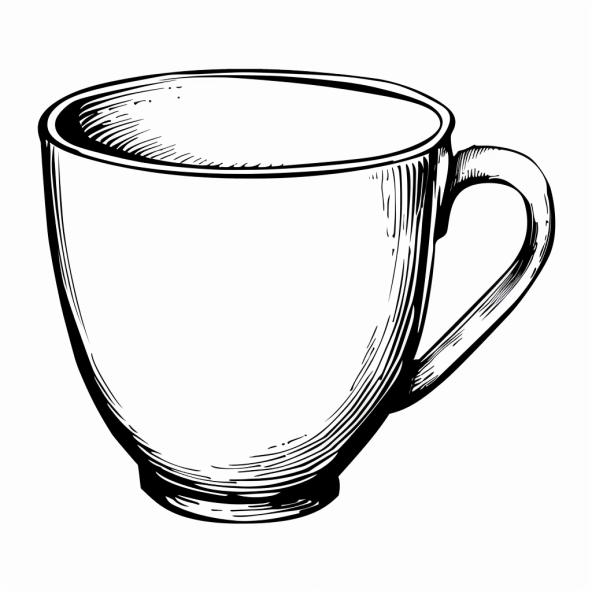
It’s what holds your morning coffee, warms your hands on a cold day, or clinks gently in a kitchen cabinet. In German, it’s die Tasse. This is your German Word of the Day - cozy, common, and perfect for anyone navigating daily life, from breakfast tables to coffee shops.
The noun Tasse means cup (especially for hot drinks), and it’s one of the 1000 most frequently used nouns in German. Whether you’re sipping Kaffee, Tee, or Kakao, you’ll hear this word a lot.
It’s a feminine noun, so we say die Tasse (want to learn gender without guessing? Our video lesson will make it stick).
Tasse is pronounced [TAS-suh]
Tas has a short German a; American task has a different vowel.
se - a soft “suh”
Stress on the first syllable: TASse
Ich trinke jeden Morgen eine Tasse Kaffee.I drink a cup of coffee every morning.
Willst du eine Tasse Tee?Want a cup of tea?
Sie stellte die Tasse vorsichtig auf den Tisch.She placed the cup carefully on the table.
Tasse typically refers to ceramic or porcelain cups for hot drinks-not wine glasses (Glas). A mug is often called a Becher, which is also the word for a plastic or paper cup.
☕ Common combinations:
Kaffeetasse - coffee cup
Teetasse - teacup
Lieblingstasse - favorite mug
Espressotasse - espresso cup
Tassenset - cup set (matching dishware)
🗣️ Common phrases:
eine Tasse trinken - to have a cup of something
eine Tasse nehmen - to grab a cup
die Tasse ist voll / leer - the cup is full / empty
eine halbe Tasse Milch - half a cup of milk (used in cooking too)
nicht alle Tassen im Schrank haben - to have a screw loose
Hoch die Tassen! - Bottoms up!
“Magst du eine Tasse Kaffee?”Would you like a cup of coffee?
“Wo ist meine Tasse mit dem Herz drauf?”Where’s my cup with the heart on it?
“Die Tasse ist noch heiß.”The cup is still hot.
Mia: Möchtest du etwas trinken?Jonas: Ja, gern. Hast du Tee?Mia: Klar - grün oder schwarz?Jonas: Egal. Hauptsache heiß - und in einer großen Tasse!
Translation:Mia: Would you like something to drink?Jonas: Yes, please. Do you have tea?Mia: Sure - green or black?Jonas: Doesn’t matter. As long as it’s hot - and in a big cup!
Nominative:Die Tasse ist hübsch.The cup is pretty.
Accusative:Ich nehme die Tasse aus dem Schrank.I’m taking the cup out of the cupboard.
Dative:Der Löffel liegt in der Tasse.The spoon is in the cup.
Genitive:Der Rand der Tasse ist abgebrochen.The rim of the cup is chipped.
Tassenschrank - cupboard for mugs and cups
Tassenwärmer - mug warmer (USB-powered or electric)
Tassendesign - cup design
Tasseninhalt - contents of a cup
tassenweise - “by the cup” (e.g. Kaffee tassenweise trinken)
☕ Fun fact: Coffee can be served in a small porcelain Tasse or a larger mug, depending on the setting. In Austrian German, Häferl or Becher might be used instead for a bigger cup or mug.
📘 Duden entry: https://www.duden.de/rechtschreibung/Tasse🎥 Want a warm, comforting start to your German learning? Our free video course teaches the top 1000 German nouns with real-life examples, visuals, and grammar help.
Ready for more German Words of the Day?Do you know what Täter means? Hopefully, not the one who broke your favorite Tasse.And what about Tempel? In some cultures, even a Tasse has ceremonial importance.
Free download
Leave your email and I’ll send you a link to the ebook. You’ll also get my occasional German-learning tips. No spam, unsubscribe anytime.


Comments
Loading comments…