

21 December 2025
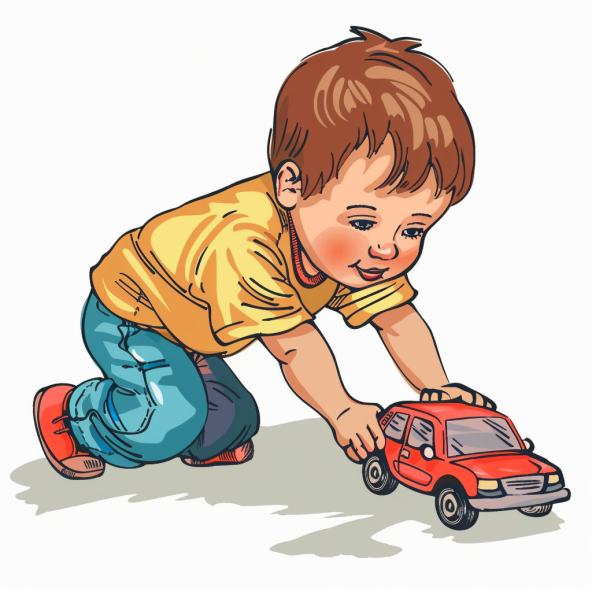
The German word for toy is das Spielzeug.It literally means “play thing,” and it refers to anything made for playing - action figures, dolls, LEGO bricks, puzzles, even squeaky dog toys. You’ll hear it in families, stores, and anywhere childhood lives on.
It’s one of the 1000 most frequently used nouns in German and a fun word to add to your vocabulary toolbox.
It’s a neuter noun: das Spielzeug.Want to get a feel for patterns that actually help with gender? Our video lesson makes gender easy to grasp.
Pronunciation:Spielzeug is pronounced [SHPEEL-tsoyk]
“SHPEEL” rhymes with “reel”
“tsoyk” - “ts” + “oy” as in “boy” + k (the final g sounds like k)Two syllables: SHPEEL-tsoyk
Die Kinder spielen mit ihrem neuen Spielzeug.
The children are playing with their new toy.
Ich habe das Spielzeug im Wohnzimmer gefunden.
I found the toy in the living room.
Das ist kein Spielzeug - sei vorsichtig!
That’s not a toy - be careful!
🧸 Spielzeug refers to physical toys for kids (and sometimes pets). It often works as a collective noun - das Spielzeug can mean “the toys” - and the plural Spielzeuge is rare. It includes dolls (Puppen), model cars, toy blocks, and more. It can also appear in phrases like Spielzeugladen (toy store) or Spielzeugauto (toy car).
🐶 It’s also used for animals - Hundespielzeug means dog toy, and you’ll find it labeled as such in pet shops.
🚫 In adult conversation, calling something nur ein Spielzeug can be dismissive - like calling a sports car a “rich kid’s toy” (ein Spielzeug für Erwachsene).
“Wo ist dein ganzes Spielzeug hin?”
Where did all your toys go?
“Dieses Spielzeug macht Geräusche, wenn man es drückt.”
This toy makes noise when you press it.
“Das ist teures Spielzeug!”
That’s some expensive gear! (often joking or sarcastic)
Papa: Was willst du zum Geburtstag?Lina: Noch mehr Spielzeug! Vielleicht eine Puppe.Papa: Du hast doch schon so viele.Lina: Aber keine mit rosa Kleid!
Translation:Dad: What do you want for your birthday?Lina: More toys! Maybe a doll.Dad: But you already have so many.Lina: But none with a pink dress!
Nominative:Das Spielzeug ist kaputt.
The toy is broken.
Accusative:Ich kaufe das Spielzeug für meinen Sohn.
I’m buying the toy for my son.
Dative:Das Kind spielt mit dem Spielzeug.
The child is playing with the toy.
Genitive:Die Farbe des Spielzeugs ist verblasst.
The color of the toy has faded.
While Spielzeug is the main way to say toy in German, there are more specific words for types of toys. A doll is die Puppe, a teddy bear is der Teddybär, and a model train is die Modelleisenbahn. The term Kinderspielzeug emphasizes that something is for kids, while Erwachsenenspielzeug can either mean hobby-grade gadgets or be used jokingly (and sometimes suggestively, so context matters!). For digital entertainment, Spiele means games. Spielgeräte are devices or equipment used for play, such as swings or stilts.
You’ll often see Spielzeug in compound words like Spielzeuggeschäft (toy shop), Spielzeugwaffe (toy weapon), or Spielzeugkiste (toy box). In some contexts, people use it metaphorically - calling a fancy car, high-tech drone, or expensive kitchen gadget a Spielzeug für Erwachsene. In advertising and media, the phrase pädagogisch wertvolles Spielzeug (“educational toy”) is common and used to appeal to parents.
🧠 Fun fact: The word Spielzeug combines spielen (to play) with the suffix -zeug, which originally meant “stuff” or “gear.” The same root appears in Werkzeug (tool), Flugzeug (airplane = “flying thing”), and Fahrzeug (vehicle = “driving thing”).
📘 Duden entry for Spielzeug🎥 Want to make learning German feel like play? Our free video course teaches the top 1000 German nouns - with structure, clarity, and just the right amount of fun.
Ready for more German Words of the Day?Do you know what Station means? It’s where the train - and your vocabulary - stops next.And what about Stellung? It can tell you where you stand, literally or metaphorically.
Free download
Leave your email and I’ll send you a link to the ebook. You’ll also get my occasional German-learning tips. No spam, unsubscribe anytime.


Comments
Loading comments…