

21 December 2025
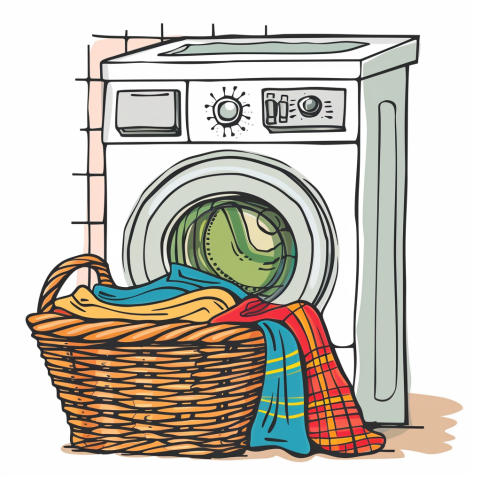
It’s what piles up during the week, spins in the machine, and hangs on the line. In German, it’s called die Wäsche. This is your German word of the day, and it’s a regular part of life - whether you’re doing chores, packing for travel, or just trying to find a clean shirt.
The noun Wäsche means laundry, washing, or underwear, and it’s one of the 1000 most frequently used nouns in German. You’ll see it on labels, laundry room signs, and everyday to-do lists.
It’s a feminine noun, so we say die Wäsche (not sure when to use der, die, or das? Our quick gender-crash-course video will make it finally make sense: Watch the 5-minute video lesson on German noun genders).
Wäsche is pronounced [VEH-shuh].
It’s a gentle-sounding word for a surprisingly large part of life.
Ich muss noch die Wäsche waschen.I still have to do the laundry.
Die Wäsche ist noch nass.The laundry is still wet.
Wäsche can refer to both:
It’s often used in combination with related terms:
Note: Wäsche normally has no plural when it means laundry or linen. Wäschen can refer to separate washing operations or treatments, such as hair washes.
Even beginners will hear or use Wäsche when talking about chores, routines, or travel prep. You might say:
“Ich muss meine Wäsche machen.” - I have to do my laundry.“Wo ist der Wäschekorb?” - Where is the laundry basket?“Die Wäsche ist trocken.” - The laundry is dry.
It’s also one of those words you’ll encounter when navigating apartments in Germany - especially if you share a laundry room or need to schedule a wash time.
Jonas: Hast du schon die Wäsche gemacht?Lena: Nein, die Waschmaschine ist noch besetzt.Jonas: Wann bist du dran?Lena: In einer halben Stunde.
Jonas: Have you done the laundry yet?Lena: No, the washing machine is still in use.Jonas: When is your turn?Lena: In half an hour.
Nominative:Die Wäsche ist sauber.The laundry is clean.
Accusative:Ich bringe die Wäsche nach unten.I’m taking the laundry downstairs.
Dative:Mit der Wäsche bin ich endlich fertig.I’m finally done with the laundry.
Genitive:Der Geruch der Wäsche ist frisch.The smell of the laundry is fresh.
Feminine case pattern: die, die, der, der
Related terms you’ll often hear or read:
Wäscheleine and Wäscheständer are useful words for air-drying laundry; Wäschetrockner is the word for a clothes dryer.
📘 Duden entry: https://www.duden.de/rechtschreibung/Waesche🎥 Learn Wäsche and the rest of the top 1000 German nouns in our free online video course: Watch the 1000 German Nouns video course
Ready for more German words of the day? Do you know what Waffe means? How about Wache? Find out!
Free download
Leave your email and I’ll send you a link to the ebook. You’ll also get my occasional German-learning tips. No spam, unsubscribe anytime.


Comments
Loading comments…