

21 December 2025
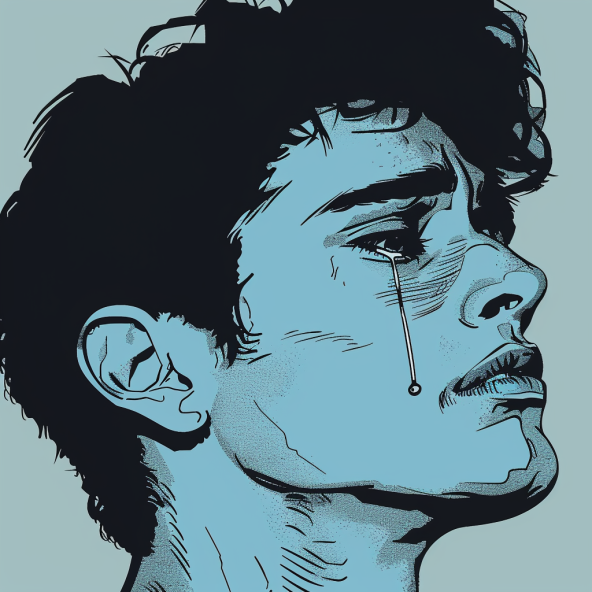
It’s what rolls down your cheek when you’re heartbroken, overwhelmed, or even laughing too hard. In German, it’s die Träne. This is your German Word of the Day - tender, poetic, and packed with emotion.
The noun Träne means tear (as in the drop from your eye), and it’s one of the 1000 most frequently used nouns in German. You’ll hear it in literature, songs, films, and emotional everyday moments.
It’s a feminine noun, so we say die Träne (still confused about gender? Our video lesson makes it easy and memorable).
Träne is pronounced [TREH-nuh]
Trä - a long, steady ä vowel; avoid the “ay” glide in English “tray”
ne like “nuh”
Stress is on the first syllable: TRÄne
Eine einzelne Träne lief über ihre Wange.A single tear ran down her cheek.
Ich konnte meine Tränen nicht zurückhalten.I couldn’t hold back my tears.
Vor Lachen kamen mir die Tränen.I laughed so hard I had tears in my eyes.
While Träne refers specifically to a tear, its usage often implies emotion - not just a physical drop of liquid.
Common expressions:
in Tränen ausbrechen - to burst into tears
Tränen vergießen - to shed tears
Freudentränen - tears of joy
Krokodilstränen - crocodile tears (fake or insincere)
Tränen in den Augen haben - to have tears in your eyes
Plural form: die Tränen
Also used in poetic or dramatic ways:
Tränen der Erinnerung - tears of remembrance
Tränen trocknen - to dry someone’s tears
“Sie konnte ihre Tränen nicht mehr zurückhalten.”She couldn’t hold back her tears.
“Das war so schön, ich hatte Tränen in den Augen.”That was so beautiful, I had tears in my eyes.
“Keine Tränen mehr, okay?”No more tears, okay?
Ella: Warum weinst du?Liam: Ich hab den Film nicht ausgehalten…Ella: Oh Mann, hast du Tränen in den Augen?Liam: Ja. Und Taschentücher hab ich auch keine!
Translation:Ella: Why are you crying?Liam: I couldn’t handle that movie…Ella: Oh wow, do you have tears in your eyes?Liam: Yeah. And I don’t even have tissues!
Nominative:Die Träne fiel lautlos.The tear fell silently.
Accusative:Ich sah die Träne auf ihrem Gesicht.I saw the tear on her face.
Dative:Mit einer Träne im Auge hat sie Lebewohl gesagt.With a tear in her eye, she said goodbye.
Genitive:Die Spur der Träne blieb sichtbar.The trail of the tear remained visible.
Tränenfluss - tear flow (medical or poetic)
Tränendrüse - tear gland
Tränensack - tear sac (anatomical)
tränenreich - tearful, full of tears (literary)
Tränenszene - tearful scene (in film or theater)
🥲 Fun fact: Tears can be happy in German too-Wir haben Tränen gelacht means “We laughed till we cried.” And careful: tear as in “rip” is a completely different word - der Riss (verb: reißen).
📘 Duden entry: https://www.duden.de/rechtschreibung/Traene🎥 Want to learn German words that hit home? Our free video course teaches the top 1000 nouns with visuals, grammar tips, and real-life context that sticks - tears not included.
Ready for more German Words of the Day?Do you know what Trauer means? It’s often what brings the Träne.And what about Treppe? Be careful not to trip and fall… or you might cry a Träne.
Free download
Leave your email and I’ll send you a link to the ebook. You’ll also get my occasional German-learning tips. No spam, unsubscribe anytime.


Comments
Loading comments…