

21 December 2025
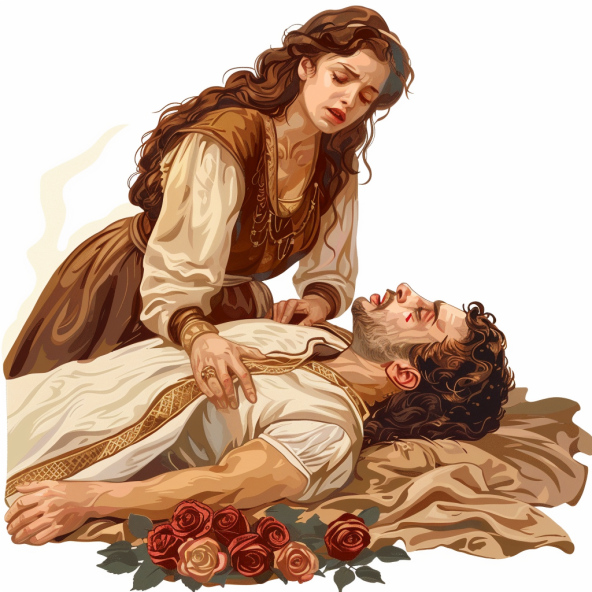
It’s the word for heartbreak, disaster, and the kind of story that doesn’t have a happy ending. In German, it’s die Tragödie. This is your German word of the day, and you’ll hear it in the theater, in the news, and in conversations about loss and drama - both real and imagined.
The noun Tragödie means tragedy, and it’s one of the 1000 most frequently used nouns in German. It’s used for emotional loss, cultural commentary, and classic dramatic structures going all the way back to Greek theater.
It’s a feminine noun, so we say die Tragödie (still learning how to guess the right gender? Our video lesson helps make that second nature).
Tragödie is pronounced [tra-GÖ-dee-uh].
Tra like “trah,”
gö like “guh” with a rounded ö (as in French deux),
die like “dee,”
Final -e is pronounced softly: “uh”
Stress is on the second syllable: tra-GÖ-die
It sounds dramatic - because it is.
Das war eine echte Tragödie.That was a true tragedy.
Die Tragödie erschütterte die ganze Stadt.The tragedy shook the entire city.
Tragödie refers to events that are devastating, emotionally intense, or dramatically doomed - whether in real life or fiction.
Types of usage:
In real events:
eine menschliche Tragödie - a human tragedy
die Tragödie eines Unfalls - the tragedy of an accident
In the arts:
eine klassische Tragödie - a classical tragedy (e.g., Shakespeare)
die Tragödie in fünf Akten - the five-act tragedy
Phrases you might hear:
eine Tragödie erleben - to experience a tragedy
in eine Tragödie münden - to end in tragedy
zwischen Tragödie und Farce - between tragedy and farce (often used in political speech)
You’ll hear Tragödie when people describe major losses, accidents, or emotional breakdowns:
“Die Geschichte der Familie ist eine Tragödie.” - The family’s story is a tragedy.“Der Film war keine Komödie, eher eine Tragödie.” - The movie wasn’t a comedy - more like a tragedy.“Das war eine Tragödie mit Ansage.” - That was a tragedy waiting to happen.
In literature, theater, and politics, it’s also used metaphorically.
Lena: Hast du die Nachrichten gesehen?Markus: Ja… die Tragödie in der Türkei.Lena: Es ist so traurig.Markus: Ich hoffe, es gibt schnell Hilfe.
Lena: Did you see the news?Markus: Yeah… the tragedy in Turkey.Lena: It’s so sad.Markus: I hope help arrives quickly.
Nominative:Die Tragödie hat alle tief getroffen.The tragedy affected everyone deeply.
Accusative:Wir erinnern uns an die Tragödie.We remember the tragedy.
Dative:Mit der Tragödie begann alles.Everything started with the tragedy.
Genitive:Die Ursache der Tragödie bleibt unklar.The cause of the tragedy remains unclear.
Feminine case pattern: die, die, der, der
Related terms:
tragisch - tragic (adjective)
Trauerspiel - another word for tragedy (esp. in older literature)
Katastrophe - catastrophe or disaster (often overlaps with Tragödie)
Schicksalsschlag - a blow of fate, often used for personal tragedy
Tragödienautor / Tragödiendichter - tragedian (playwright of tragedies)
Cultural note: The term Tragödie is still used in literary studies and journalism, and it can overlap with Katastrophe. Tragödie often emphasizes a tragic loss, while Katastrophe emphasizes a disastrous event or outcome.
📘 Duden entry🎥 Want to explore German from comedy to tragedy? Our free video course teaches the top 1000 nouns - with context, visuals, and tips that make every word easier to remember.
Ready for more German Words of the Day?Do you know what Tee means? It might be the only comfort in the middle of a Tragödie.And what about Tod? That one’s never easy - but often unavoidable in stories like these.
Free download
Leave your email and I’ll send you a link to the ebook. You’ll also get my occasional German-learning tips. No spam, unsubscribe anytime.


Comments
Loading comments…