

21 December 2025
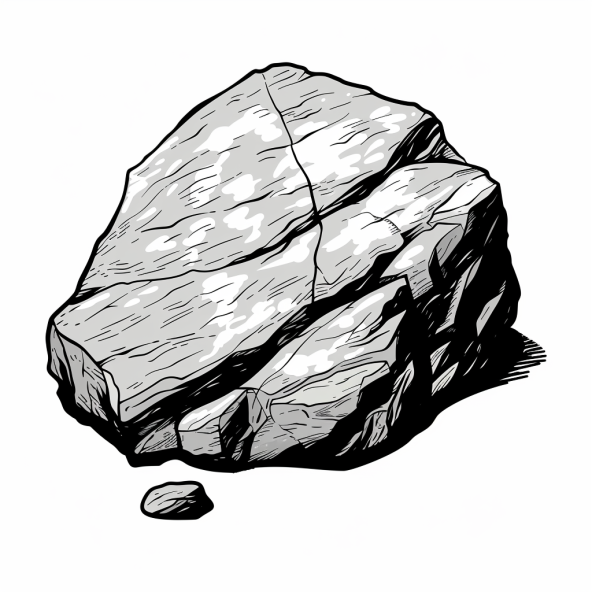
The German word for stone is der Stein.It refers to natural stones, pebbles, gemstones, and even fruit pits. From geology to fairy tales, Stein in German is a small word with solid cultural and literal weight.
It’s one of the 1000 most frequently used nouns in German (download the full illustrated PDF for free), and it’s a word that shows up in nature, construction, language, and metaphor.
It’s a masculine noun: der Stein.Want to get better at remembering noun genders? This video lesson helps you spot patterns and learn them quickly.
Pronunciation:Stein is pronounced [shtine]
Rhymes with “mine”
Begins with “sh” as in “shoe”One syllable: SHTINE
Ich habe einen schönen Stein am Strand gefunden.
I found a beautiful stone on the beach.
Der Weg ist voller kleiner Steine.
The path is full of little stones.
Er warf einen Stein ins Wasser.
He threw a stone into the water.
🪨 Stein refers to natural stones, rocks, gemstones, and even fruit pits. Context is key.
🍑 In food, it means the pit or stone of a fruit: Pfirsich mit Stein = “peach with a pit.”
💎 In jewelry, ein wertvoller Stein could refer to a gemstone.
🗿 In fairy tales or history, it may mean “boulder,” “rock,” or “magical stone.”
🏗️ It also appears in architecture and construction - Baustein (building block), Ziegelstein (brick), Grabstein (gravestone).
“Pass auf, da liegt ein Stein auf dem Weg.”
Watch out - there’s a stone on the path.
“Der Ring hat einen blauen Stein.”
The ring has a blue stone.
“Ich hab mir den Fuß an einem Stein gestoßen.”
I stubbed my foot on a stone.
Timo: Was sammelst du da?Lena: Steine - die glatten vom Fluss.Timo: Hast du schon viele?Lena: Ja, schau mal. Dieser hier glänzt sogar!
Translation:Timo: What are you collecting?Lena: Stones - the smooth ones from the river.Timo: Do you have a lot already?Lena: Yes, look. This one even shines!
Nominative:Der Stein ist schwer.
The stone is heavy.
Accusative:Ich habe den Stein aufgehoben.
I picked up the stone.
Dative:Mit dem Stein kannst du nichts anfangen.
You can’t do anything with that stone.
Genitive:Die Farbe des Steins ist besonders.
The color of the stone is special.
While Stein is the core word for stone in German, other terms add nuance:
Fels / Felsen - large rock, cliff, boulder
Kiesel - pebble
Brocken - chunk or large piece of stone
Granit / Marmor - specific types of stone like granite or marble
For gemstones, Edelstein (precious stone) and Halbedelstein (semi-precious stone) are common.
Stein appears in compound nouns across many areas:
Grabstein - gravestone
Meilenstein - milestone (also used figuratively)
Backstein - brick
Schlussstein - keystone
Steinschlag - rockfall (common on road signs!)
Fruchtstein - fruit stone/pit
Idiomatically, you might hear:Ein Stein fällt vom Herzen - “A stone falls from the heart,” meaning a weight has been lifted.Jemandem Steine in den Weg legen - “To put stones in someone’s path,” meaning to make things harder for them.
Bei jemandem einen Stein im Brett haben - to be in someone’s good books.
🧠 Fun fact: The name Stein is also common in German surnames and town names -like Steinbach, Steinfurt, or the surname Steinmeier- often pointing to geographic or occupational origins. A beer stein is usually a Krug in German; a one-liter beer mug is a Maßkrug.
📘 Duden entry for Stein🎥 Want to build your vocabulary stone by stone? Our free video course teaches the top 1000 German nouns - with examples, visuals, and a printable illustrated PDF to support every step of your learning.
Ready for more German Words of the Day?Do you know what Schwachsinn means? It’s what some people call rolling the wrong Stein uphill.And what about Schwierigkeit? Every Stein in your path might just be one.
Free download
Leave your email and I’ll send you a link to the ebook. You’ll also get my occasional German-learning tips. No spam, unsubscribe anytime.


Comments
Loading comments…