

21 December 2025
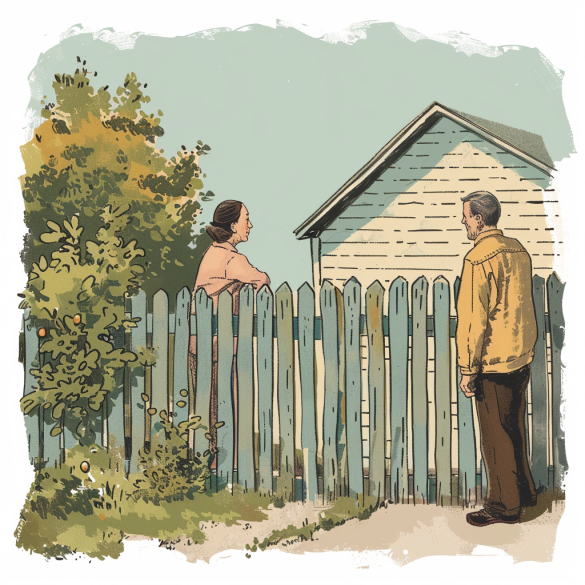
When you borrow sugar, complain about noise, or make small talk at the mailbox, your neighbor is involved. Learning how to say neighbor in German gives you the vocabulary to talk about community, proximity, and everyday interaction.
The word is der Nachbar, and the plural is die Nachbarn. It’s masculine, although the feminine form die Nachbarin is also very common in real life. If gender still confuses you sometimes, my gender video lesson clears up the article system quickly.
Nachbar appears on the list of the 1000 most frequently used nouns in German - not just in housing conversations, but in friendly (or not-so-friendly) social talk too.
Watch the endings in the common weak-noun pattern: der Nachbar, den Nachbarn, dem Nachbarn, des Nachbarn. The plural is die Nachbarn. A rarer genitive des Nachbars is also accepted. Here are examples in all four cases:
Nominative:Der Nachbar ist sehr nett.The neighbor is very nice.
Accusative:Ich habe den Nachbarn gesehen.I saw the neighbor.
Dative:Ich helfe dem Nachbarn oft.I often help the neighbor.
Genitive:Das Auto des Nachbarn ist neu.The neighbor’s car is new.
Nachbar shows up with phrases like:
nebenan wohnen - to live next door
der laute Nachbar - the loud neighbor
guter Kontakt zum Nachbarn - good relationship with the neighbor
Streit mit dem Nachbarn - conflict with the neighbor
Verbs: kennen (to know), grüßen (to greet), helfen (to help), sich beschweren (to complain), besuchen (to visit)Adjectives: freundlich (friendly), älter (older), neugierig (nosy), hilfsbereit (helpful), unbekannt (unknown)
Culturally, neighbors play a big role in German life - there’s often an expectation of consideration, especially in apartment buildings. Two useful words are die Hausordnung (house rules) and die Ruhezeiten (quiet hours).
Beginner dialogue using Nachbar:
A: Kennst du deinen Nachbarn?B: Ja, wir sprechen oft im Treppenhaus.A: Do you know your neighbor?B: Yes, we often talk in the stairwell.
Now it’s your turn. Think of your answer and say it out loud using Nachbar or Nachbarn in your sentence.
“Was würdest du machen, wenn dein Nachbar sehr laut wäre?”What would you do if your neighbor were very loud?
Say it out loud to make the word feel natural in your own speech.
German Word of the DayNow you know how to say neighbor in German - and how der Nachbar connects you to daily life, local culture, and shared space.
Download the free illustrated PDF of the 1000 most frequently used nouns in German and keep growing your vocabulary in the most practical ways possible.
Ready for more German Words of the Day?Review Mitglied - and talk about who belongs where.Or go back to Militär - and see how structure and duty shape vocabulary.
Free download
Leave your email and I’ll send you a link to the ebook. You’ll also get my occasional German-learning tips. No spam, unsubscribe anytime.


Comments
Loading comments…