

21 December 2025
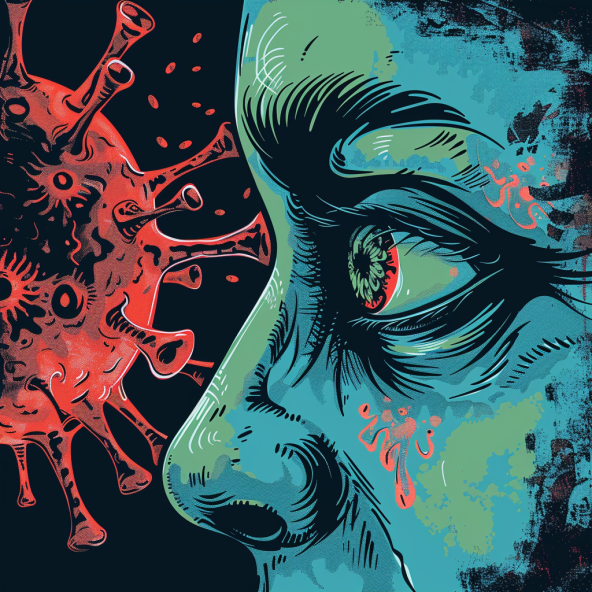
Sooner or later, every learner needs to talk about feeling sick, going to the doctor, or describing health problems. That’s why it’s essential to learn how to say illness in German - and it will instantly give you access to more personal and practical conversations.
The word is Krankheit, pronounced /ˈkʁaŋkhaɪ̯t/. The first a is short, as in German krank; the ending -heit sounds roughly like English “height.” Stress the first syllable.
Krankheit is feminine, so it’s die Krankheit. The plural is die Krankheiten. You can learn how articles and gender work across all noun types in my gender video lesson.
Krankheit is one of the 1000 most frequently used nouns in German - and you’ll hear it not just in doctor’s offices, but in casual conversations, news stories, and even school.
Examples in all four cases:
Nominative:Die Krankheit dauert schon eine Woche.The illness has lasted a week.
Accusative:Er hatte eine schwere Krankheit.He had a serious illness.
Dative:Mit der Krankheit ist sie gut zurechtgekommen.She coped well with the illness.
Genitive:Die Symptome der Krankheit sind bekannt.The symptoms of the illness are known.
Real-World Tips for Learners
Krankheit is the general word for “illness” or “sickness,” and it can refer to anything from a cold to a serious disease. It’s commonly paired with adjectives like:
eine schlimme Krankheit - a bad illness
eine seltene Krankheit - a rare illness
eine chronische Krankheit - a chronic illness
an einer Krankheit leiden - to suffer from an illness
You might hear someone say, Ich bin wegen Krankheit nicht zur Arbeit gegangen (I didn’t go to work because of illness). In medical contexts, it’s very useful, but even in everyday German, Krankheit is often used to describe everything from the flu to emotional or mental struggles.
The adjective krank means “sick”: Ich bin krank is a natural everyday way to say “I’m sick.” Ich habe eine Krankheit means “I have an illness” or “I have a disease”; it is grammatical and can describe a condition, but it does not automatically imply that the illness is serious or long-term.
Beginner dialogue using Krankheit:
A: Warum warst du gestern nicht da?B: Ich hatte die Grippe - eine fiese Krankheit! Deshalb bin ich im Bett geblieben.A: Why weren’t you there yesterday?B: I had the flu - a nasty illness! That’s why I stayed in bed.
Now it’s your turn. Think of your answer and say it aloud using Krankheit.
“Welche Krankheit hattest du zuletzt - und wie lange hast du dich krank gefühlt?”What illness did you last have - and how long did you feel sick?
Say your answer out loud in German and include Krankheit in the sentence.
German Word of the DayNow you know how to say illness in German - and how die Krankheit opens the door to practical and empathetic conversation in everyday life.
Download the free illustrated PDF of the 1000 most frequently used nouns in German and keep adding useful words to your toolkit.
Ready for more German Words of the Day?Check out Krebs - a layered word for illness, animals, and astrology.Or revisit Krieger - powerful, historical, and metaphorical vocabulary.
Free download
Leave your email and I’ll send you a link to the ebook. You’ll also get my occasional German-learning tips. No spam, unsubscribe anytime.


Comments
Loading comments…