

21 December 2025
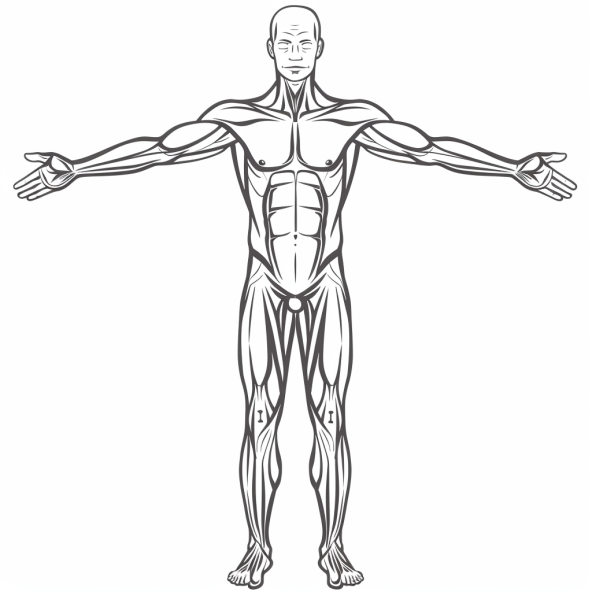
You’ll hear it at the doctor, in sports, in science, or when talking about how you feel: the word for body in German is something you’ll use in dozens of real-world situations. Whether you’re pointing to body parts or talking about wellbeing, this word is essential.
The German word is Körper - pronounced /ˈkœʁpɐ/: stress the first syllable. For short ö, say a short e sound with rounded lips; the unstressed -er is a weak vowel, not English “fur.” It has a solid, rounded sound, much like the concept it describes.
Körper is masculine, so it’s der Körper. The plural is die Körper. If you’re not sure when or why that article changes, you can get a full, easy breakdown in my gender video lesson.
It’s one of the 1000 most frequently used nouns in German - and is crucial when talking about health, identity, and how you physically experience the world.
Examples in all four cases:
Nominative:Der Körper braucht Schlaf und Bewegung.The body needs sleep and movement.
Accusative:Ich trainiere meinen Körper jeden Tag.I train my body every day.
Dative:Du solltest deinem Körper zuhören.You should listen to your body.
Genitive:Die Funktionen des Körpers sind komplex.The functions of the body are complex.
Real-World Tips for Learners
Körper appears in so many useful phrases and expressions. Some of the most common include:
Körper und Geist - body and mind
den Körper stärken - to strengthen the body
körperliche Arbeit - physical labor
den eigenen Körper akzeptieren - to accept one’s own body
die Körpersprache - body language
The plural form Körper also comes up in scientific or formal contexts, like in geometry (ein geometrischer Körper - a solid figure) or physics (mehrere Körper im Raum - multiple bodies in space). You might also see it in compound nouns like Körperpflege (body care), Körpertemperatur, or Körperbau (physique/build). Don’t confuse Körper with die Leiche (a corpse). Der Leib is a more elevated or literary word for body that also appears in everyday fixed phrases, such as mit Leib und Seele (with heart and soul).
Beginner dialogue using Körper:
A: Warum machst du Yoga?B: Weil es meinem Körper guttut.A: Why do you do yoga?B: Because it’s good for my body.
Now it’s your turn. Think of your answer and say it aloud using Körper.
“Was machst du, um deinen Körper gesund zu halten?”What do you do to keep your body healthy?
Say your answer out loud in German and include Körper in the sentence.
German Word of the DayNow you know how to say body in German - and how der Körper helps you speak with clarity about wellness, identity, and everyday life.
Download the free illustrated PDF of the 1000 most frequently used nouns in German to grow your vocabulary and your confidence.
Ready for more German Words of the Day?Check out Kraft - great for physical, emotional, and even legal strength.Or revisit Kram - a super useful word for your everyday clutter and belongings.
Free download
Leave your email and I’ll send you a link to the ebook. You’ll also get my occasional German-learning tips. No spam, unsubscribe anytime.


Comments
Loading comments…