

21 December 2025
Whether you’re signing up for language classes, checking exchange rates, or adjusting your direction in life, you’ll eventually need to say course in German. And lucky for learners, it’s a short, versatile word that appears in education, business, and everyday speech.
The word is Kurs - pronounced /kʊʁs/, with a short u like the vowel in English “put.” Say the r lightly; avoid the long “oo” suggested by “koors.” It’s crisp and clear, and easy to recognize when spoken.
Kurs is masculine, so it’s der Kurs. The plural is die Kurse. If you want a fast, reliable way to get article patterns right, my gender video lesson can help you build confidence.
It’s one of the 1000 most frequently used nouns in German, and thanks to its flexible meanings, you’ll run into it all over the place.
Examples in all four cases:
Nominative:Der Kurs beginnt um acht Uhr.The course begins at eight o’clock.
Accusative:Ich mache den Kurs online.I’m taking the course online.
Dative:Mit dem Kurs bin ich sehr zufrieden.I’m very happy with the course.
Genitive:Das Ziel des Kurses ist klar.The course’s goal is clear.
Real-World Tips for Learners
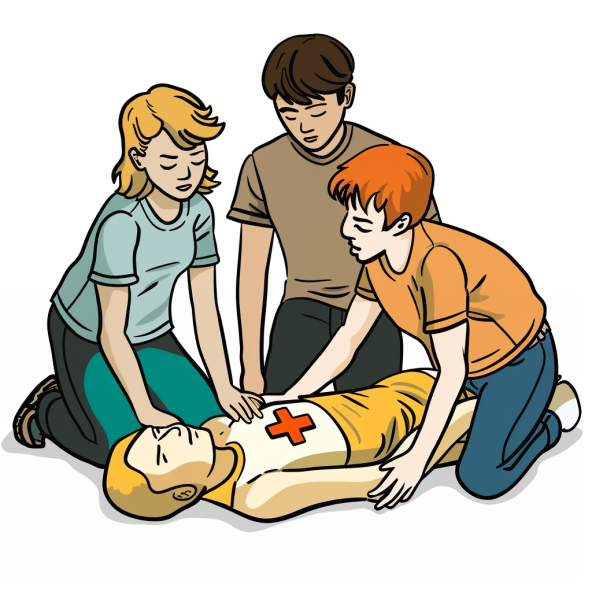
In education, Kurs means a course of study or training. You might take einen Deutschkurs (a German course), einen Tanzkurs (a dance class), or einen Erste-Hilfe-Kurs (a first aid course). In schools, adult education centers, or online learning platforms, Kurs is everywhere.
But the word has a second life in the world of finance. The Wechselkurs is the exchange rate, and if you’re checking the Euro-Kurs, you’re looking at how much the euro is worth today. In the stock market, Kurs refers to share prices or value: Der Kurs ist gefallen means “The price has dropped.”
There’s also a more metaphorical or directional use. Einen neuen Kurs einschlagen means “to set a new course” - used both literally and figuratively, like making a big life decision or changing strategy. In that sense, it overlaps a bit with English phrases like “stay the course” or “change course.”
Learners should be aware of false friends here: For “curriculum,” use Lehrplan or, in some academic contexts, Curriculum. A university degree program is a Studiengang; a subject or major is a Studienfach. A Kurs is usually an individual course, not the whole degree program.
Beginner dialogue using Kurs:
A: Machst du einen Deutschkurs?B: Ja, dreimal pro Woche.A: Are you taking a German course?B: Yes, three times a week.
Now it’s your turn. Think of your answer and say it aloud using Kurs.
“Welchen Kurs würdest du gern besuchen - und warum?”Which course would you like to attend - and why?
Say your answer aloud in German and make sure to include Kurs in your sentence.
German Word of the DayNow you know how to say course in German - and how der Kurs helps you navigate school, currency, and change.
Download the free illustrated PDF of the 1000 most frequently used nouns in German to stay on track with essential vocabulary.
Ready for more German Words of the Day?Check out Leber - and explore health, food, and emotion.Or revisit Legende - and learn to talk about myths and icons.
Free download
Leave your email and I’ll send you a link to the ebook. You’ll also get my occasional German-learning tips. No spam, unsubscribe anytime.


Comments
Loading comments…