

21 December 2025
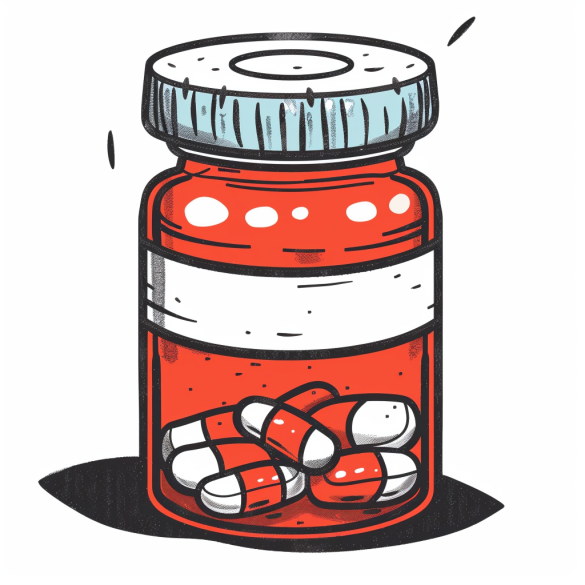
German has a way of packing cultural context into simple words, and die Pille is no exception. Pille can mean an ordinary pill. In the expression die Pille nehmen, it commonly refers to the birth control pill. That’s important to know as a learner, because context matters - especially with frequently used words like this one.Pille is one of the 1000 most frequently used nouns in German.
The word is die Pille in the singular and die Pillen in the plural. It is feminine, and you can find a complete overview of German noun gender - including article patterns and exceptions - in my video lesson on gender. Understanding gender and plural forms is key to making your German sound natural.
The same noun covers both senses: eine Pille can be an ordinary pill, and Pillen is its plural. Context, rather than singular versus plural, determines the meaning. For an ordinary medicinal tablet, die Tablette is a common precise word; eine Pille can also mean an ordinary pill.
This word appears across all grammatical cases, and learning how to use it correctly will make your speech and writing feel much more fluent.
Die Pille is the subject of the sentence when it’s in the nominative case, like in:Die Pille ist klein und rund.The pill is small and round.
When used as a direct object in the accusative, it might appear as:Ich habe die Pille heute Morgen vergessen.I forgot the pill this morning.
In the dative, it can serve as an indirect object:Viele Frauen vertrauen der Pille seit Jahren.Many women have trusted the pill for years.
In the genitive case, which expresses possession, you might hear:Die Nebenwirkungen der Pille sind gut erforscht.The side effects of the pill are well researched.
These structures will come up in spoken and written German more often than you might expect - and being able to use them correctly makes all the difference in clarity and fluency.
In daily use, die Pille often goes hand in hand with verbs like nehmen (to take), vergessen (to forget), absetzen (to discontinue), and verschreiben (to prescribe). With the plural Pillen, you’ll encounter combinations like zwei Pillen am Tag nehmen (take two pills a day) or die Pillen wirken nicht sofort (the pills don’t work immediately).
Adjectives that commonly appear with this word include hormonell (hormonal), klein (small), täglich (daily), and rezeptpflichtig (prescription-only). These phrases help learners move beyond the dictionary definition into meaningful, natural use.
In real conversation, a sentence like “Ich nehme die Pille seit drei Jahren” might come up in a personal or medical context. In contrast, if someone says, “Ich habe ein paar Pillen gegen Kopfschmerzen dabei,” it’s about general medication. Understanding this difference - and being able to produce it yourself - is part of what builds confident, learner-ready German.
To practice using Pille, try creating short dialogues that simulate everyday situations: a doctor’s visit, a conversation with a roommate, or a pharmacy question. Repeating phrases aloud like die Pille nehmen or Pillen gegen Schmerzen is a great way to internalize structure and usage. Writing your own example sentences in all four cases will help reinforce how the word behaves grammatically.
German Word of the DayYou’ve now learned how to say pill in German - and why die Pille often means more than just medication. Whether you’re reading, listening, or speaking, recognizing how this word works will help you communicate more precisely and naturally in German.
Want to keep learning essential German nouns in context?Download the free illustrated PDF of the 1000 most frequently used nouns in German and continue your vocabulary journey.
Ready for more German Words of the Day?What does Presse really mean in German? It’s not just the media - it’s influence.And how about Professor? In Germany, the title means much more than just “teacher.”
Free download
Leave your email and I’ll send you a link to the ebook. You’ll also get my occasional German-learning tips. No spam, unsubscribe anytime.


Comments
Loading comments…