

21 December 2025
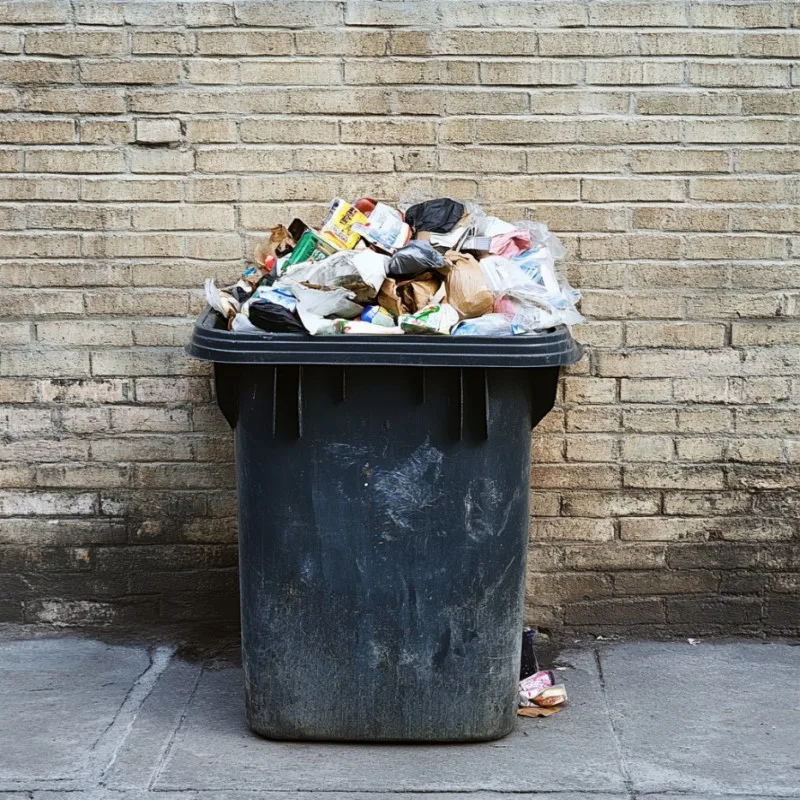
In American English, garbage and trash both refer broadly to discarded material. Rubbish is more common in British English. In German, Müll and Abfall are useful equivalents.
Similarly, the German words Müll and Abfall are often used interchangeably. Müll is the everyday word; Abfall (literally “fall-off”) sounds a bit more formal and technical - it’s what you’ll see on official signs and in recycling rules.
A “trash can” or “rubbish bin” is usually Mülleimer or Abfalleimer or, for the big one outside, Mülltonne. A “wastepaper basket” is Papierkorb. Useful sorting terms include Restmüll (residual waste), Biomüll (organic waste), Altpapier (wastepaper), and Gelber Sack or Gelbe Tonne (yellow bag or bin for certain packaging). Local collection rules vary.
“Garbage collection” or “garbage disposal” is Müllabfuhr in German, a “garbage truck” is Müllwagen, the “garbage dump” or “rubbish dump” is Mülldeponie or Müllhalde. A “garbage man” is Müllmann. A “rubbish sack” or “trash bag” is Müllsack.
Müll can also describe what someone says as nonsense (“rubbish”), although Quatsch is more common.
Überall ist Müll. Garbage is everywhere.
Er redet nur noch Müll. He‘s talking nothing but nonsense.
Sie holen jeden Freitag den Müll ab. They pick up the garbage every Friday.
Der Hausmüll wurde heute abgeholt. The household waste was collected today.
Jeden Morgen kommt der Müllwagen um 6 Uhr. The garbage truck comes every morning at six am.
Free download
Leave your email and I’ll send you a link to the ebook. You’ll also get my occasional German-learning tips. No spam, unsubscribe anytime.


Comments
Loading comments…